Strategy Deep Dives
The Real Story Behind Each Approach

Strategy 01
Long-Term Rental
This is the foundation. You buy a home, rent it to a family or professional on a 12-month lease, and collect rent while the property appreciates and your tenant pays down your mortgage. It is not glamorous, but it is reliable. And in a market like Gilbert where rents have stayed strong and tenant quality is high, the fundamentals hold.
With a professional property manager (typically 8 to 10% of monthly rent), this can be genuinely passive. I use a PM on my own rentals and spend maybe an hour a month thinking about them.
What Works
- Predictable monthly income
- Hands-off with a PM
- Tenant builds your equity
- Strong renter demand in Gilbert
- 1031 exchange friendly
What to Watch
- Lower income than STR
- Tenant issues can be costly
- Vacancy months hurt
- Slower to adjust to market rents
Example: 3BD in Queen Creek, $415,000
Negative cash flow at current rates is real, but it is not the whole picture. At $415K, a 4% appreciation year adds $16,600 in equity. Add mortgage paydown and tax benefits, and total return still pencils for patient investors.

Strategy 02
Short-Term Rental (Airbnb / VRBO)
The East Valley is not Sedona, but it has consistent STR demand that most investors overlook. Snowbirds from October through March, spring training in February, families visiting Banner and Mayo Clinic, business travelers at the Intel and TSMC campuses, and people doing 30-day exploratory stays before relocating. That demand spreads across the year differently than tourist markets.
Gilbert and Chandler STRs require a local license and TPT (transaction privilege tax) registration. I walk all my clients through the compliance side before their first listing goes live. It is straightforward, just not optional.
What Works
- 2x to 3x the income of LTR
- Flexible use (block for yourself)
- Easier to raise rates in high season
- Strong demand near hospitals and sports
What to Watch
- Active management required
- Occupancy varies seasonally
- HOA restrictions in many communities
- Higher wear and turnover costs
- Regulatory risk if city rules change
Example: 4BD near Banner Ironwood, $520,000
Tighter than it looks on paper, but peak season months (Jan to March, October) can run $5,500+ gross. Annual average cash flow is stronger than the monthly median suggests.
Strategy 03
Mid-Term Rental
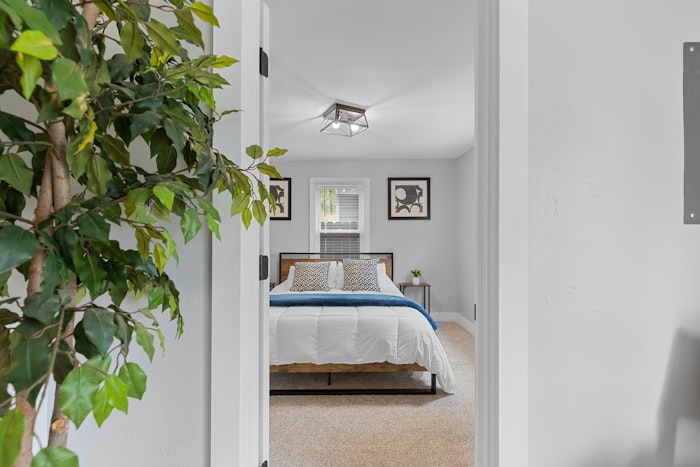
This is the strategy I get most excited talking about right now, especially with my healthcare background. Mid-term rentals are furnished properties rented for 30 days to 6 months, primarily to travel nurses, locum doctors, and corporate relocators. You get 20 to 30% above standard rent without the nightly turnover of an Airbnb.
The East Valley is home to Banner Health, HonorHealth, Dignity Health, and Valleywise. Hundreds of travel nurses rotate through on 13-week contracts. They need furnished, quality housing near their hospital. Most of them are spending $3,000+ on cramped extended-stay hotels. There is a real gap here, and the investor who fills it wins on multiple fronts: better rent, lower vacancy, less wear than STR, and tenants who are professionals with stable incomes.
What Works
- Above-market rent without nightly turnover
- Professional, vetted tenants
- Not subject to many HOA STR restrictions
- Lower operating costs than Airbnb
- Strong and growing demand near hospitals
What to Watch
- Upfront furnishing cost ($8K to $15K)
- Higher vacancy between 30-day tenants
- Need to actively market on Furnished Finder, etc.
- Lease structure differs from standard
Example: 3BD near Banner Gateway, Gilbert, $435,000
Even where monthly flow is slightly negative, the premium rent reduces the gap vs. LTR and appreciation does the rest. Many investors run MTR for 1 to 2 years then transition to LTR once rates improve.
A Note for Healthcare Workers
If you are a nurse, physician, therapist, or anyone in healthcare, you have an edge in this strategy that most investors do not. You understand the travel nurse lifecycle, the contract cycles, what these tenants need, and how to market to them authentically. That is a real competitive advantage. I help healthcare professionals leverage it constantly.
Let's Talk MTR Strategy
Strategy 04
House Hacking
House hacking is simple: you buy a property, live in one part of it, and rent out the rest. The rental income offsets your mortgage. In the best cases, you live for free (or close to it) while building equity at the same time.
Because you are occupying the property, you qualify for owner-occupant loan terms (3.5% down on an FHA loan, or 5% conventional) instead of the 20 to 25% required for investment properties. That dramatically lowers your entry cost. Cass and I used this approach on our first property and it changed everything. The tenant paid most of our mortgage while we built a down payment for the next one.
What Works
- Get in with 3.5 to 5% down
- Tenants offset your mortgage
- Build equity while you live there
- No experience required to start
- Forces savings and discipline
What to Watch
- You live near your tenants
- True duplexes are rare in Gilbert
- Tenant selection is personal here
- HOA rules may restrict renting units
Example: SFH with Casita, Gilbert, $480,000
Compare that to renting a 2BD apartment in Gilbert for $1,800 to $2,100, except now you own a $480K asset. That is the house hack in a sentence.